Mastering Quiet Confidence During Upscale Restaurant Dining
Lesezeit: 12 Minuten
I learned upscale restaurant etiquette the hard way when I walked into The Ledbury in Notting Hill at 21 and froze at the sight of six forks. My date watched me panic-scan the table, and I felt my face burn. That dinner cost him £380, and I spent half of it terrified I'd pick up the wrong spoon. Now, after 4 years of sugar dating and countless evenings at Michelin-starred venues across London, Manchester, and Edinburgh, I move through these spaces like I belong there. Because I do, and so do you.
Upscale restaurant etiquette isn't about memorizing arbitrary rules. It's about projecting calm, showing respect, and focusing on connection rather than cutlery. When you understand the framework, you stop performing and start enjoying. According to research from the University of Oxford's Department of Experimental Psychology published in 2023, diners who felt confident in formal settings reported 43% higher enjoyment of their meals compared to anxious counterparts. That confidence isn't innate. I built mine piece by piece, mistake by mistake, until posh dining became second nature.
Reading the Table Without Reading a Manual
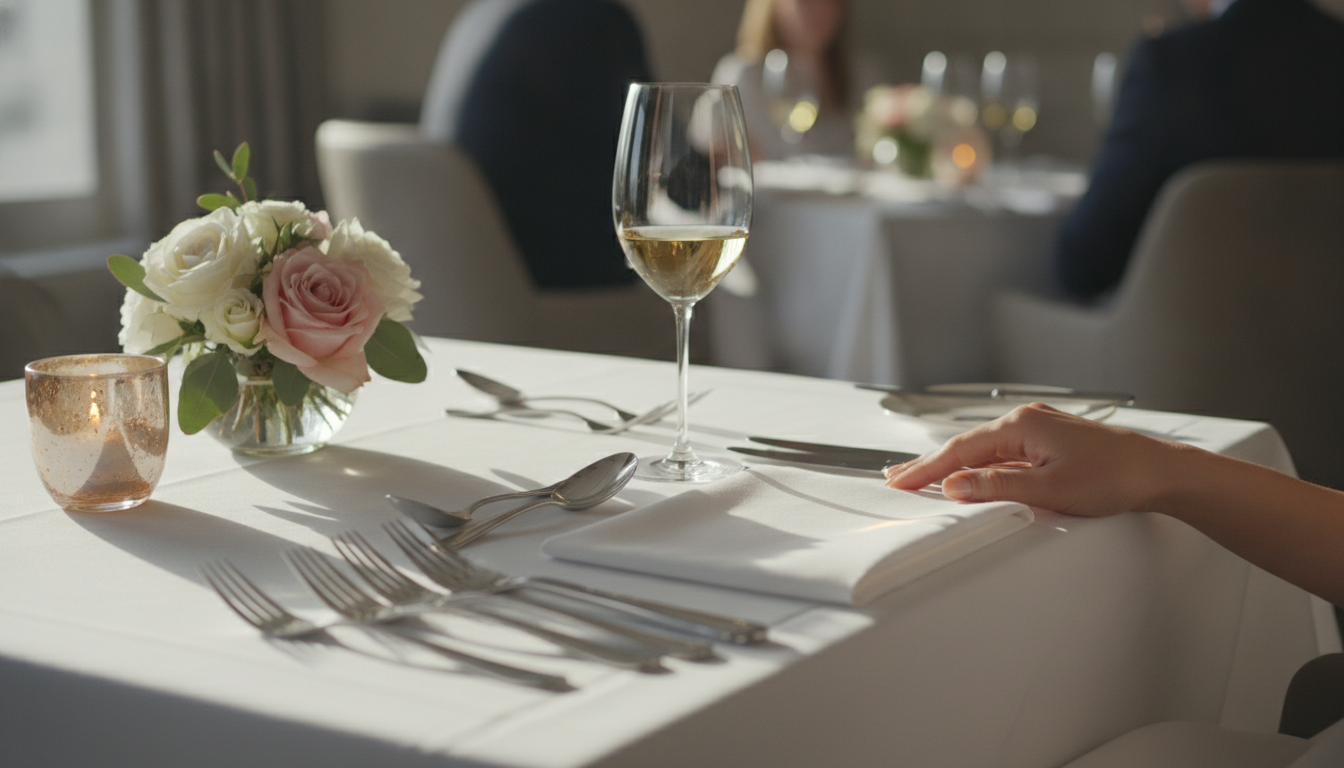
The silverware arrangement at places like Restaurant Gordon Ramsay or Sketch follows one simple principle: work outside-in. Your first course uses the outermost utensils. I use the small fork furthest from my plate for appetizers, then move inward with each course. The dessert spoon and fork sit horizontally above your plate. Bread plates sit to your left, water glasses to your right. I remember this with "food left, drink right."
At Alain Ducasse at The Dorchester last autumn, our server placed a small bowl of warm water with a lemon slice between courses. I watched my date dip his fingers in it, a finger bowl for shellfish. I'd have lifted it to my lips if I hadn't paused to observe first. When uncertain, I take a 3-second beat to watch others or wait for my companion to begin. No one notices a brief pause, but everyone notices when you drink from the finger bowl.
Navigating the Wine List and Sommelier Interaction
I don't pretend to know wine I've never tasted. At Corrigan's Mayfair, when the sommelier presented a leather-bound wine list with 600 options, I smiled and said, "I'd love a recommendation for something elegant that pairs with seafood, ideally under £80." He appreciated the clear direction. According to the Wine & Spirit Education Trust's 2024 UK consumer report, 67% of diners at upscale restaurants feel intimidated by wine selection, but sommeliers consistently rate directness as more impressive than false expertise.
When the sommelier pours a taste, I've learned to skip the elaborate swirling I don't understand. I take a small sip, nod, and say "lovely, thank you." The tasting ritual exists to check the wine isn't corked, not to perform a wine expert routine. If it tastes like vinegar or wet cardboard, I mention it. Otherwise, I approve and move forward. This approach mirrors advice I share about finding authentic confidence in sugar relationships, honesty always outperforms performance.
Ordering with Grace and Navigating Foreign Menus
I photograph menus before dates now. At La Dame de Pic London, I spent 10 minutes on my phone in the taxi beforehand, googling "demi-glace" and "mousseline." I arrived knowing the menu vocabulary without fumbling mid-order. When pronunciation defeats me, I point to the menu item and say, "I'd love this, please." No server has ever judged me. They've served hundreds who do the same.
I order mid-range price items unless my date explicitly insists otherwise. At Aqua Shard last month, the menu ranged from £18 starters to a £95 Wagyu main. I selected a £38 fish course. This shows consideration without false modesty. I avoid the cheapest item, which can read as discomfort, and the most expensive, which can seem presumptuous. I also state my dietary preferences immediately rather than making substitutions after ordering. "I don't eat red meat" saves everyone time and shows decisiveness.
Managing Courses and Timing Your Pace
I match my eating speed to my companion's, finishing each course within 30 seconds of when he does. At Hélène Darroze at The Connaught, I learned this the uncomfortable way when I finished my scallops in 4 minutes while my date savored his over 12. Our server cleared my plate, and I sat empty-handed watching him eat. Now I take smaller bites, pause between forkfuls, and use the meal as conversation framework rather than fuel stop.
Between courses, I rest my cutlery at the 4:20 position on my plate, fork tines up, knife blade in. This signals I'm still eating. When finished, I place them parallel at 4:20 with fork tines down. Servers at upscale establishments read these signals without interrupting conversation. I've watched this system work flawlessly at places from Dinner by Heston Blumenthal to The Fat Duck in Bray.
Conversation Skills That Complement Fine Dining Confidence
I keep my phone in my bag on silent from arrival to departure. Research from the University of British Columbia's Department of Psychology in 2023 found that phone presence on restaurant tables, even face-down, reduced conversation quality by 31% and perceived connection by 28%. At Core by Clare Smyth last December, I watched a woman take 11 photos of her £85 tasting menu while her date sat silent. I took zero. The meal exists in my memory more vividly than in her camera roll.
I ask open questions about my date's experiences rather than monopolizing conversation. "What brought you to London originally?" invites storytelling. "How do you find this place compares to restaurants in Paris?" shows I've listened to previous conversations. I've learned that elegant behaviour tips aren't about rigid formality, they're about making others feel heard and valued. This skill transfers directly from managing first meeting nerves to maintaining poise throughout the relationship.
Handling Service Staff with Respect and Clarity
I thank servers by name after reading their name tag. "Thank you, James" creates a moment of human connection that costs nothing. When I need something, I make eye contact and wait for acknowledgment rather than snapping fingers or calling out. At Pétrus in Belgravia, when I needed water refilled, I caught our server's eye and tilted my empty glass slightly. She arrived within 15 seconds.
If something arrives incorrectly, I address it immediately but kindly. "I'm sorry, I ordered this without shellfish." I never send food back dramatically or complain loudly. According to a 2024 survey by Harden's restaurant guide covering 187 UK fine dining venues, 89% of chefs and managers reported that discrete, respectful feedback receives immediate resolution, while aggressive complaints often result in defensive service.
Physical Presence and Posture Throughout the Meal
I sit with my back straight but not rigid, shoulders relaxed, elbows off the table during eating. When not eating, I rest one hand in my lap and one loosely on the table. I learned this at 23 after watching myself hunch over my plate in a reflection at Gymkhana in Mayfair. I looked like I was protecting my food from thieves. Now I maintain an open, upright posture that projects ease.
I chew with my mouth closed, take manageable bites, and never speak with food in my mouth. These basics matter more than knowing which fork to use. I also excuse myself to the restroom if I need to fix makeup, check my phone, or compose myself. I've taken three-minute bathroom breaks at countless dinners when conversation turned stressful or I needed a reset. Walking away briefly prevents visible anxiety at the table.
Practical Tips for Looking Composed in Posh Settings
- Arrive 10 minutes early to visit the restroom, check your appearance, and take three deep breaths before your date arrives, eliminating rushed entrance energy
- Order still water instead of sparkling to avoid hiccup risks and keep lipstick intact throughout the meal
- Place your napkin on your lap immediately upon sitting, folded in half with the crease toward your waist, and use it to dab corners of your mouth rather than wiping
- If you drop cutlery, leave it on the floor and quietly request a replacement from your server rather than scrambling under the table
- End the meal by placing your napkin loosely to the left of your plate, not folded perfectly, signaling you've finished without appearing overly fastidious
Handling Unfamiliar Foods and Exotic Preparations
When uni arrived at Umu in Mayfair, I had no idea how to eat it. I watched my date for 3 seconds, then followed his lead. Sea urchin tastes better than the anxiety of asking feels bad. I've learned that sophisticated dining guide principles always include permission to be curious. Saying "I haven't tried this before, how do you recommend approaching it?" shows openness, not ignorance.
At Sabor in Heddon Street, when we ordered percebes (goose barnacles), our server demonstrated the technique without me asking. Many upscale venues expect unfamiliarity with certain ingredients and proactively offer guidance. I accept it graciously. I also taste everything offered unless I have allergies. Saying "no thank you" to a £45 course my date ordered to share reads as either wasteful or precious.
Managing the Bill Without Awkwardness
I never reach for the bill in sugar dating contexts. When the check arrives, I continue our conversation naturally while my date handles payment. I don't glance at the total or comment on cost. At Sexy Fish last spring, when the bill came to £540 for two, I maintained eye contact with my date and thanked him for a wonderful evening once he'd settled the check. The transaction happens, I acknowledge his generosity, we move forward.
If he hands me his card to give to the server (this happens occasionally with established arrangements), I do so discreetly and return it directly to him. I never look at the receipt. According to etiquette expert William Hanson's 2023 guide published in Tatler, gracefully accepting generosity without performance or protest demonstrates more sophistication than false gestures toward splitting bills.
Building Long-Term Confidence Through Experience
I've dined at 47 Michelin-starred restaurants across the UK since I started sugar dating in 2020. The first ten felt like examinations. The next twenty felt like learning. The rest feel like pleasure. Upscale restaurant etiquette becomes instinctive through exposure, not through memorizing Emily Post. I recommend accepting every dinner invitation, even when nervous, because each experience builds muscle memory.
I also treat myself to one solo fine dining experience per year. Last November, I booked a single seat at Dinner by Heston and ate the £140 tasting menu alone. Navigating that space without a date to lean on or distract me forced me to own my presence. I left knowing I could handle any dining room in any city without anxiety. That confidence translates into better dates, better conversation, and better connections with generous partners who appreciate a woman comfortable in their world.
Common Mistakes I've Made and How I Recovered
At Sketch in 2021, I took a phone call at the table. My date's face changed immediately. I apologized, silenced my phone, and didn't check it again until we left. He appreciated the correction. At Hide in 2022, I ordered the most expensive main course without reading the room. My date was fine with it, but I learned to calibrate. At The Ritz in 2023, I mispronounced "bouillabaisse" so badly our server didn't understand me. I laughed, pointed to the menu, and moved on. None of these moments ended relationships or ruined evenings because I acknowledged them briefly and continued forward.
The recovery matters more than the mistake. I don't over-apologize or dwell. I correct, smile, and refocus on my companion. This resilience connects to broader sugar dating skills around maintaining boundaries while staying graceful under pressure. You'll make mistakes. They won't matter if you handle them with lightness rather than shame.
Frequently Asked Questions
How do I handle food I genuinely dislike during a tasting menu?
Take one polite bite, place your cutlery in the finished position, and leave the rest. When the server clears it, you can quietly say, "That flavor profile wasn't for me, but I'm looking forward to the next course." Never make a scene or push the plate away dramatically. At an £85+ tasting menu, one missed course won't offend anyone.
What if I need to leave the table during the meal?
Place your napkin on your chair (not the table), excuse yourself briefly without detailed explanation ("Please excuse me for a moment"), and return within 5 minutes. If your date is mid-sentence, wait for a natural pause. I've done this at least three times per month for four years without issue.
Should I offer to contribute to the bill in a sugar dating context?
No. The financial dynamic is established in sugar arrangements, and offering to pay can create awkwardness or imply the arrangement isn't working. Express genuine gratitude instead. A sincere "Thank you for this incredible evening" means more than a performative wallet reach.
How do I know which bread plate is mine in a crowded table setting?
Your bread plate is always on your left. Make a lowercase "b" with your left hand (thumb and index finger form the bottom, three fingers form the stem), the circle is your bread plate. Make a "d" with your right hand, that's your drink glass. I use this trick at every formal dinner, 100% success rate.
What do I do if I spill something on myself or the table?
Blot it immediately with your napkin, signal your server discreetly for assistance, and apologize briefly to your date if it affected him. Don't make it the focus of conversation. Servers at upscale restaurants handle spills constantly and will bring club soda and fresh linens within seconds. I spilled red wine on a white dress at Locanda Locatelli in 2022, the staff had it treated before I finished apologizing.
Your Next Upscale Dining Experience Starts with One Decision
Upscale restaurant etiquette isn't a barrier meant to keep you out. It's a language you learn by showing up and practicing. The women who look effortless at The Ivy or Scott's weren't born knowing which spoon to use. They learned through experience, mistakes, observation, and repetition. You're already halfway there by reading this and caring enough to improve.
Book that intimidating reservation. Accept that dinner invitation to the place with the dress code. Walk in with your shoulders back, your phone silent, and your focus on connection rather than performance. The confidence you're seeking lives on the other side of experience, not before it. I'll see you there, probably at a corner table, enjoying every moment without checking which fork I'm holding. You'll do the same.